Legends Never Die: Revolutionary Primatologist & Conservationist Jane Goodall Passes Away at 91.
Jane Goodall is arguably one of the most important figures in the field of wildlife conservation and her contributions to the fields of science is unparalleled. In this post, we will honor her long-lasting legacy and impact on the planet through animal advocacy. 

A Quiet Revolution in Gombe

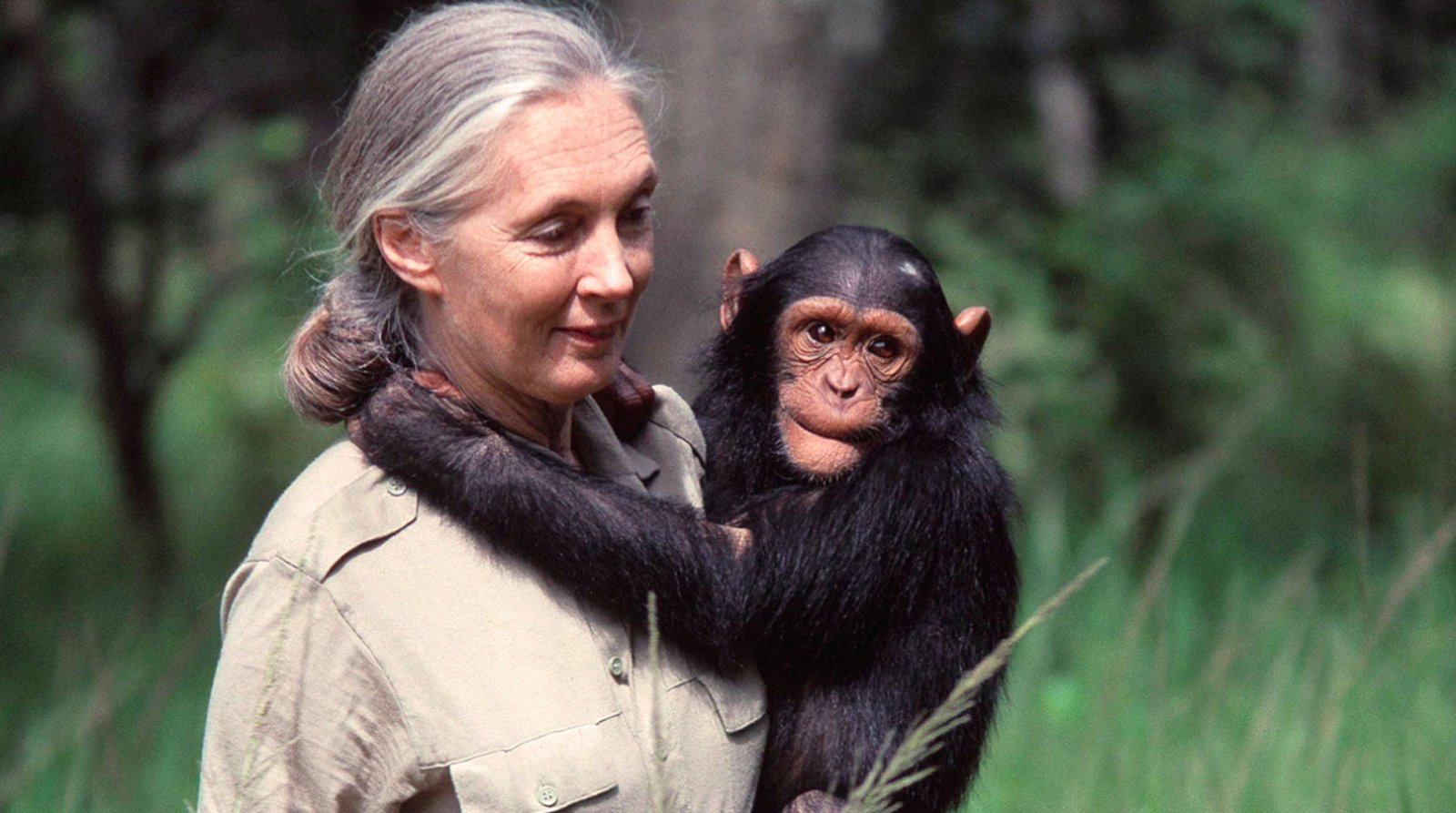
Dr. Dame Valarie Jane Morris Goodall, more commonly known as Jane Goodall, was a world-renowned primatologist and UN Messenger for Peace. She was also the founder of the Jane Goodall Institute (JGI) and Roots & Shoots. Her ground-breaking 65-year study of wild chimpanzees in Gombe, Tanzania, transformed our understanding of the animal kingdom. On October 1st, while on a tour at Los Angeles, California, she passed away peacefully due to natural causes at the age of 91.

Goodall’s journey, which began in 1960, was radical. She entered the field with no formal scientific degree, a fact for which she initially received scorn from the academic community. However, her lack of conventional training proved to be her most powerful tool. She refused to assign numbers to the chimpanzees, instead giving them names like Fifi, David Greybeard, and Mike. This approach was revolutionary—it treated the animals as individuals with personalities, a perspective that was critical to her most significant breakthroughs.


The Discovery that Redefined “Human”

What Goodall uncovered during her long-term study didn’t just change primatology; it forced the world to question the very definition of humanity.

  • Revelation 1: Chimpanzees Are Toolmakers! The biggest bombshell dropped in 1960. Goodall observed David Greybeard stripping leaves from a stick to craft a precise tool for “fishing” termites out of a mound. At the time, the ability to make and use tools was considered the sole differentiator between humans and the rest of the animal kingdom. Upon hearing the news, her mentor, Louis Leakey, famously declared: “Now we must redefine man, redefine tool, or accept chimpanzees as human.” The boundary was instantly blurred.

  • Revelation 2: The Dark Side—And The Light The prevailing view held that chimps were gentle, simple vegetarians. Goodall saw otherwise. She documented their surprisingly complex diet, showing they actively hunted and ate meat, sometimes including other monkeys. More disturbingly, she was the first to witness sustained, brutal territorial warfare between two chimpanzee communities—a finding she called the realization of the “darker side” of their nature, mirroring the worst aspects of our own. Yet, she also documented profound acts of compassion, altruism, and grief, including chimpanzees adopting orphaned peers and comforting others with hugs and kisses.

From Scientist to Global Humanitarian

By the late 1980s, Jane Goodall made the pivotal shift from field researcher to tireless activist. She saw habitat destruction and the illegal trade threatening the very creatures she dedicated her life to, leading her to champion a radical idea: conservation cannot succeed without addressing the needs of local people.


The Roots & Shoots Movement

Her most enduring humanitarian legacy is the Roots & Shoots program, founded in 1991. What started as a small gathering of students on her porch is now a vast global movement empowering youth across more than 60 countries to take practical action for people, animals, and the environment in their local communities. She instilled in millions the belief that every action matters.


An Inspiration for Vet-O-Scope

For the Vet-O-Scope community, Dr. Goodall’s life is more than inspiration—it’s a mission statement. She taught us that science and empathy are not mutually exclusive. The complex social bonds, the capacity for war, and the depths of compassion she revealed in the wild must guide how we approach veterinary care, conservation strategies, and ethical policy today.

While the loss of this icon is immense, her hopeful message lives on: if an untrained woman armed only with binoculars and patience could transform the understanding of an entire planet, imagine what we can achieve when we choose to make a difference every single day.
Lizard or Snake? Scientists Confused Over Newly Discovered Species.

The biggest puzzle piece of the Jurassic Period has just been unearthed. Found in an area with a sparse fossil record, this 167-million-year-old discovery highlights a bizarre mix of traits that challenges everything scientists thought they knew about the origin of snakes and modern lizards. 

Background


For those who are unaware of the evolutionary history of reptiles and wondering how snakes came to be, you’re looking at one of biology’s most famous mysteries. Snakes belong to a massive group of reptiles called Squamates, which include every lizard and snake species alive today. That’s more that 10,000 species in one order alone!


For years, scientists and researchers understood that snakes evolved directly from lizards. The working theory was that lizards gradually lost their limbs and developed highly specialized features, like their incredibly flexible jaw-stretching anatomy. Because the fossil record from the Jurassic period is so incomplete, finding a clear “in-between” animal that shows these snake features developing in a lizard-like body is one of the main goals of paleontologists. 


Meet the False Snake of Eglog 


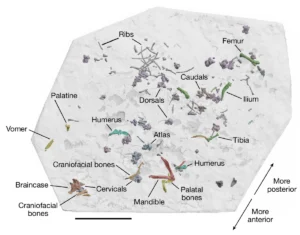
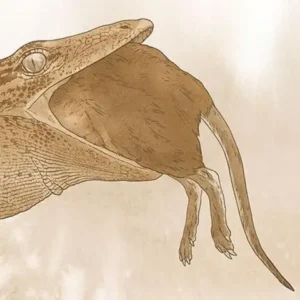
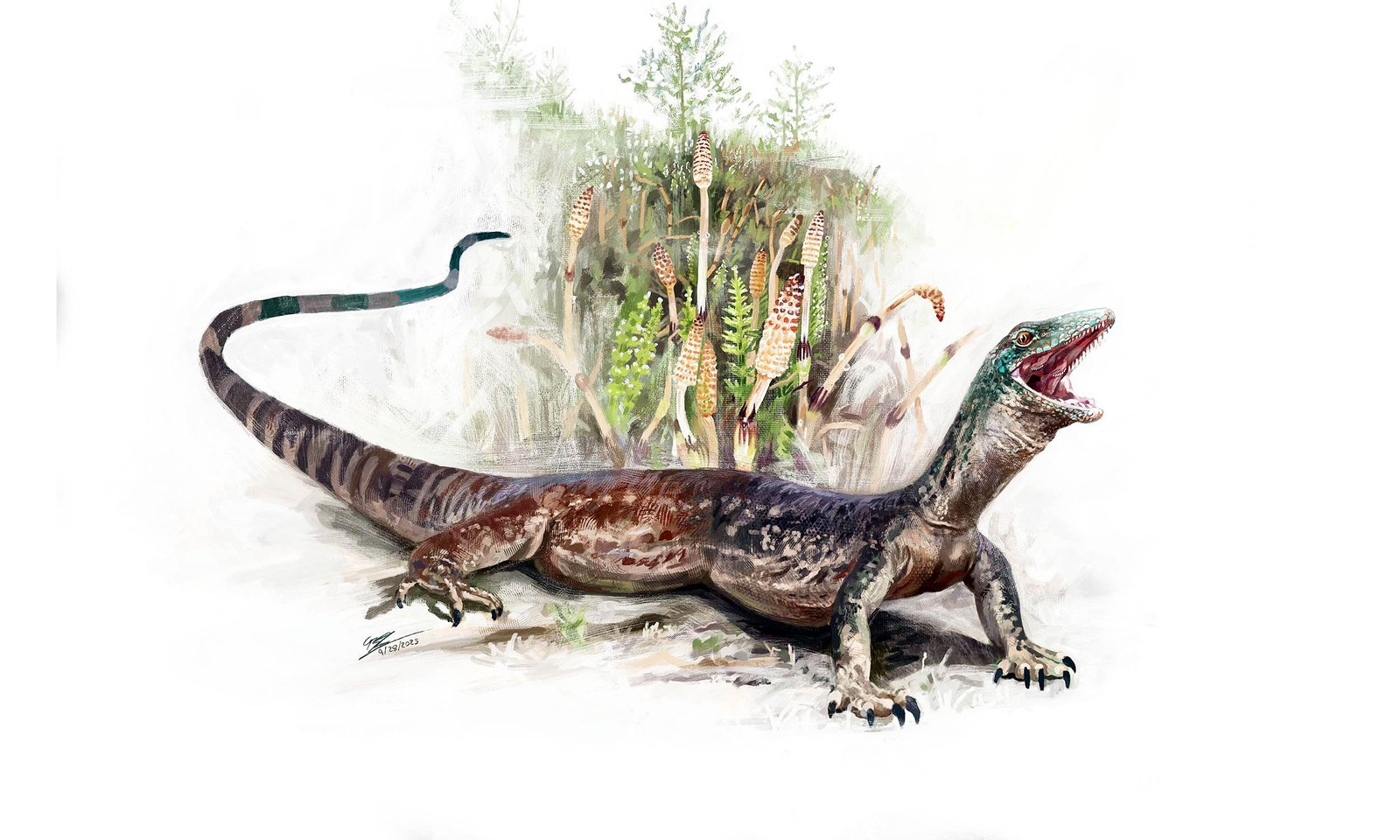
Recent fossil discovery has scientists scratching their heads and rewriting the evolutionary timeline. Unearthed on Scotland’s fossil-rich Isle of Skye, paleontologists Dr. Stig Walsh of National Museums Scotland introduced us to Breugnathair elgolensis, a 167-million-year-old reptile that is shaking up the foundation of the Squamate family tree. This “Frankenstein” of the Jurassic period, has a the short body and four limbs of gecko-like lizard, yet equipped with the elongated jaw and sharply curved, hook-like teeth of a modern python. This combination of traits, where snake and lizard features appear mixed together, earning the perfectly fitting Gaelic name: “false make of Elgol.”


Buy One Get One Free – Reptile Edition


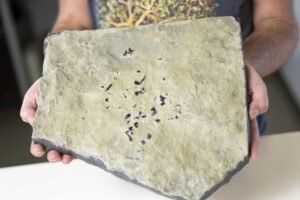
This fossil, one of the most complete Jurassic lizards ever found, presented a decade-long puzzle for researchers. The fossil was first discovered in 2016, but it took around a decade of research for the picture to become clear. Initially, some paleontologists believed the scattered fragments must have belonged to two separate animals: a lizard and a primitive snake. Why? Simply because the anatomy seemed too contradictory for one creature. However, advanced imaging techniques, including high-powered X-rays and computed tomography (CT) imaging confirmed that this was one animal.


Measuring roughly 40 centimeters (16 inches) long, about the size of a small cat, Breugnathair was one of the largest lizards in its ecosystem in the Jurassic period. It likely used those formidable, snake-like jaws and recurved teeth to prey on smaller lizards, early mammals and possibly even younger dinosaurs. With this, they dominated its niche with a primitive, yet highly specialized, predatory hunting and feeding style.


Snake Evolutionary History Rewritten


The existence of Breugnathair challenges a simple, linear path of evolution. It shows that the specialized jaw structures we associate with modern snakes (i.e. Pythons) developed much earlier and in more diverse branches of the Squamate family than previously assumed. Could Breugnathair be a direct, lizard-like ancestor of snakes? Or is it a stem-Squamate, an ancestor of all modern lizards and snakes, that independently evolved those specialized teeth? The answer remains inconclusive, as of right now, but this fossil and discovery adds to the proof that evolution is messy, unpredictable, and not linear. 


Takeaway From This Discovery


For future veterinarians, zoologists, and wildlife enthusiasts, this discovery is a perfect reminder that our understanding of anatomy and evolutionary relationships is constantly evolving, When studying comparative anatomy, it’s easy to assign traits to  specific groups, but Breugnathair elgolensis shows that mosaic anatomy (the mixing of primitive and advanced features) was widespread. The next time you study/observe snake jaws or lizard limbs, remember the “false snake of Elgol,” whose very existence forces scientists to rethink around two centuries of reptile history.